@4x-1-scaled-120x22.png)
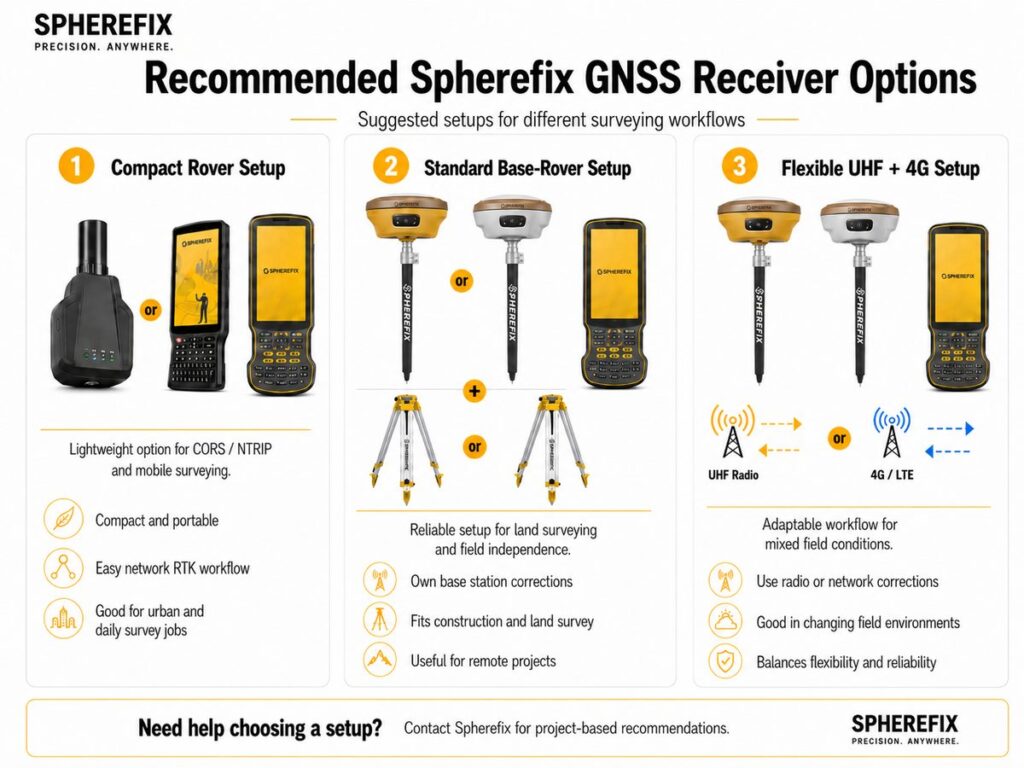
An RTK GPS receiver is often one of the first products a survey buyer searches for when a team needs faster field positioning, more practical stakeout workflows or a replacement for older equipment. The phrase "RTK GPS receiver" is commonly used in the market, even though professional systems often rely on multi-constellation GNSS receivers rather than GPS alone.
For buyers, the important question is not only what the device is called. The real question is whether the receiver, controller, correction workflow and support path fit the field job.
This guide explains how professional buyers can evaluate RTK receiver options before requesting a Spherefix quotation.
What buyers usually mean by RTK GPS receiver
RTK stands for real-time kinematic positioning. In a typical professional workflow, the receiver uses satellite positioning and correction data to support centimeter-level positioning under suitable field conditions, configuration and correction availability.
In daily search behavior, many buyers still use the phrase RTK GPS receiver. In procurement conversations, it is better to confirm:
- Which satellite constellations and GNSS functions the receiver supports
- Whether the receiver is intended for rover work, base work or both
- Whether the buyer needs a data controller
- What correction method is planned
- Which field applications the team needs to support
This helps avoid confusion between consumer GPS devices, GIS-grade equipment and professional RTK survey receivers.
Match the receiver to the job
Different field jobs create different receiver requirements. A survey team doing boundary work may focus on rover performance, stakeout workflow and controller compatibility. A construction team may care about layout workflow, repeatability and data handoff. A dealer may need a product path that can serve several customer groups.
Common RTK receiver applications include:
- Topographic survey
- Construction layout
- Land surveying and stakeout
- Сбор данных ГИС
- Road and infrastructure work
- Machine control support workflows
- Dealer demonstrations and training
For construction machinery workflows, buyers can also review the machine control GNSS solution page to understand how RTK and GNSS products fit dozer or excavator guidance discussions.
Receiver-only, controller pair or complete kit?
Before comparing models, decide what the purchase should include.
A receiver-only purchase may fit a buyer who already has compatible accessories and understands the correction workflow. A receiver and controller pair may be more practical when the team needs a complete field operation path. A base and rover kit may be needed when the project requires a local base setup.
For Spherefix buyers, it is useful to review:
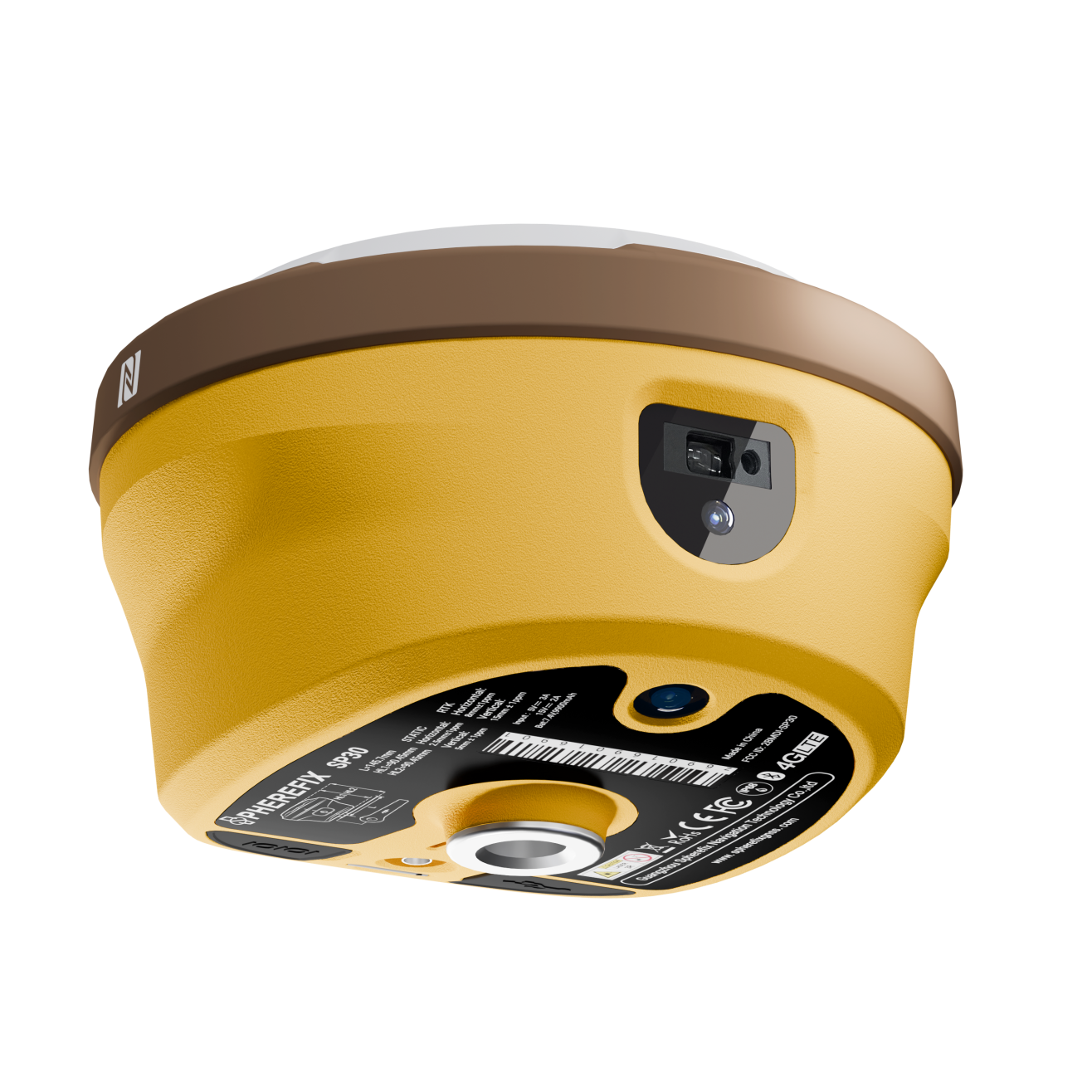
- SP30 RTK GNSS Receiver for RTK surveying and mapping inquiries.
- GNSS-приемник SP35 for professional receiver comparison and field kit planning.
- GNSS data controller products when the workflow may require controller pairing.
The final selection should be confirmed by region, field conditions, communication needs and available accessories.
How to evaluate an RTK receiver product page
A useful RTK receiver product page should help the buyer move closer to a decision. It should not only repeat broad accuracy language.
Look for:
- Clear model positioning
- Application scenarios
- Controller or accessory path
- Product images and field context
- Datasheet availability
- Inquiry or dealer support CTA
- Related products for comparison
If a product page does not answer everything, that is normal for B2B equipment. The next step should be a technical inquiry, not guessing the final configuration from a single webpage.
What to tell the supplier before asking for a quote
The quality of the quotation depends on the quality of the inquiry. Before contacting Spherefix, prepare:
- Application: surveying, mapping, construction, dealer stock or another workflow
- Region and operating environment
- Whether the receiver should work as rover, base or both
- Controller or software expectations
- Количество
- Any required brochures, datasheets or dealer material
This allows the sales and technical team to recommend a practical product path instead of treating every RTK receiver request the same way.
For buyers comparing brands
Many RTK receiver searches include brand comparisons. For a professional buyer, the comparison should focus on the actual project fit:
- Can the supplier explain the recommended configuration?
- Are product materials available for internal review?
- Can the supplier support dealer or project quotation discussions?
- Are related products available when the buyer needs a full field kit?
- Does the communication avoid unsupported claims?
Spherefix positions product pages and inquiry support around practical selection. If a buyer needs exact model details, datasheets and quotation terms, the inquiry form is the right next step.
Suggested internal buying path
- Review the GNSS receiver category.
- Compare SP30 and SP35 for RTK survey workflows.
- Check whether a controller is needed.
- Decide whether the project needs a base and rover setup.
- Send the application, region and quantity to Spherefix.
This path turns a broad "RTK GPS receiver" search into a qualified B2B inquiry.
Request RTK receiver guidance
If your team is comparing RTK receiver options for surveying, mapping, construction or dealer sales, Spherefix can help confirm the product path before quotation.
Use the request RTK receiver guidance form and include your application, region, expected quantity and model interests. Spherefix can respond with datasheet guidance and next-step configuration support.
ЧАСТО ЗАДАВАЕМЫЕ ВОПРОСЫ
Is an RTK GPS receiver the same as a GNSS receiver?
Many buyers use the phrase RTK GPS receiver, but professional RTK receivers often support GNSS workflows beyond GPS alone. Product details should be checked on the model page or datasheet.
Which Spherefix receiver should I review for RTK survey work?
SP30 and SP35 are useful starting points for RTK survey buyer discussions. The right model should be confirmed against field workflow, controller needs and regional requirements.
Do I need a controller with an RTK receiver?
Some workflows require a controller or data collector. Buyers should confirm controller pairing before quotation rather than assuming the receiver alone is enough.
What affects RTK receiver pricing?
Model, quantity, controller needs, base and rover requirements, region, logistics and support expectations can all affect pricing.
Can dealers request RTK receiver materials?
Yes. Dealers can request product information, brochures and model guidance for local customer planning through Spherefix inquiry channels.
Request RTK receiver datasheet and workflow guidance
Share your application, region, quantity and model interests with Spherefix. The team can provide datasheet guidance, related product suggestions and quotation support.
 English
 French
 German
 Spanish
 Arabic
 Russian
 Portuguese